

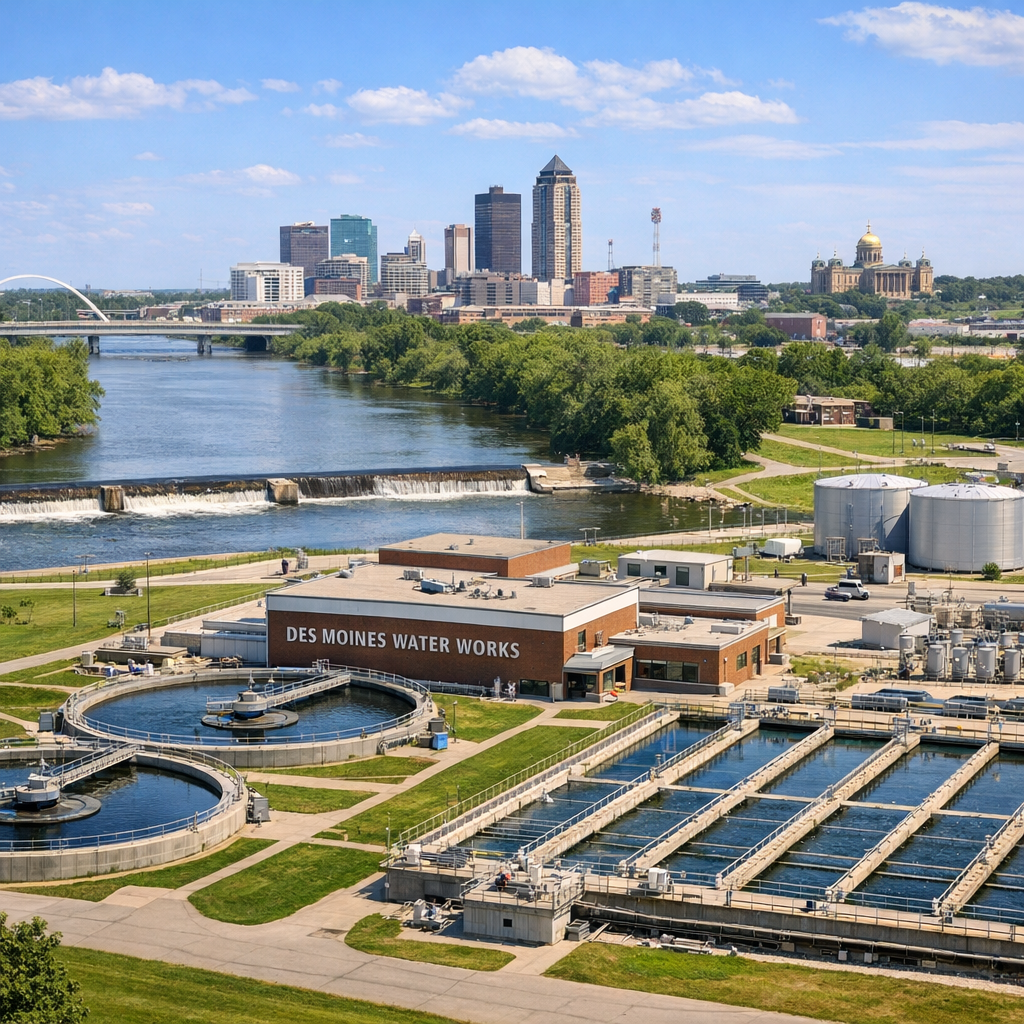
Des Moines residents are facing increasing concerns over the safety of their drinking water due to elevated nitrate levels in the Raccoon and Des Moines rivers, the city’s primary water sources. These heightened levels pose significant challenges for water treatment facilities striving to meet federal safety standards.
Understanding Nitrate Contamination
Nitrates, commonly found in agricultural fertilizers and animal manure, can seep into waterways through runoff, especially after heavy rains. High concentrations in drinking water are linked to health risks such as methemoglobinemia, or “blue baby syndrome,” which affects the blood’s ability to carry oxygen.
Recent Developments
In recent years, Des Moines Water Works has reported near-record nitrate levels, prompting the implementation of measures like lawn watering bans to reduce water demand and ensure adequate treatment capacity. Despite these efforts, the utility faces operational and financial challenges in maintaining safe drinking water standards.
Community Impact and Response
The rising nitrate levels have led to increased treatment costs, which may eventually affect consumer water rates. Community members and environmental groups are advocating for more stringent regulations and proactive measures to address the root causes of contamination, emphasizing the need for collaborative solutions involving agricultural stakeholders and policymakers.
Looking Ahead
As Des Moines continues to grapple with this issue, ongoing monitoring, public awareness, and policy interventions will be crucial in safeguarding the city’s water quality and public health.