

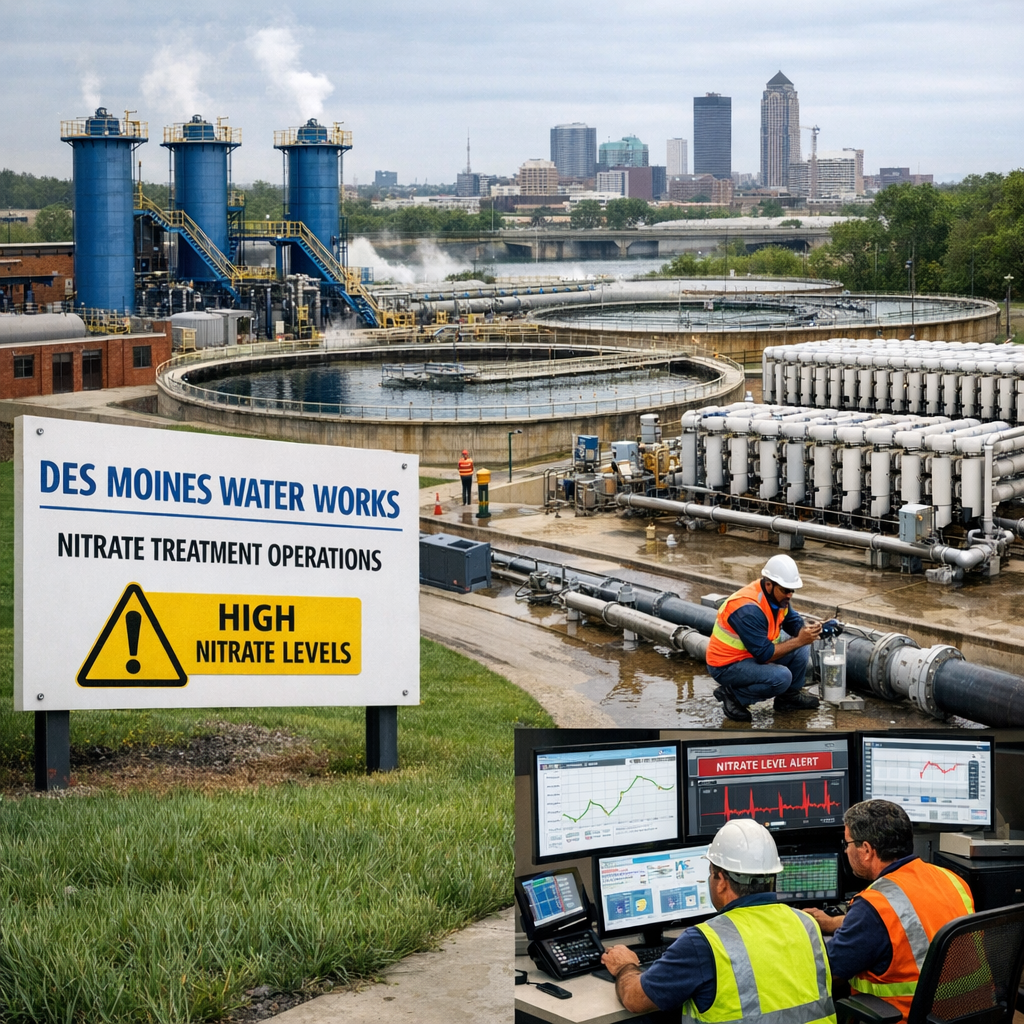
Des Moines residents are facing increasing concerns over the safety of their drinking water due to elevated nitrate levels in the Raccoon and Des Moines rivers, the city’s primary water sources. These rising levels pose significant challenges for water treatment facilities striving to meet federal safety standards.
Understanding Nitrate Contamination
Nitrates, commonly found in fertilizers and animal waste, can seep into waterways through agricultural runoff. High concentrations in drinking water are linked to health risks, including methemoglobinemia, or “blue baby syndrome,” which affects the blood’s ability to carry oxygen.
Recent Developments
In June 2025, the Central Iowa Water Works (CIWW) implemented a lawn watering ban to reduce water demand, allowing treatment facilities to manage nitrate removal more effectively. This unprecedented measure highlights the severity of the contamination issue. Source
Despite these efforts, the Des Moines Water Works Board of Trustees expressed opposition to the U.S. Environmental Protection Agency’s decision to rescind the designation of segments of the Raccoon and Des Moines rivers as impaired waters. The board emphasized that this reversal does not align with the operational and financial challenges faced in providing safe drinking water. Source
Community Impact and Response
The rising nitrate levels have prompted community discussions on sustainable agricultural practices and the need for comprehensive water management strategies. Local organizations and residents are advocating for policies that address the root causes of contamination to ensure long-term water quality.
Looking Ahead
As Des Moines continues to grapple with this issue, collaboration between government agencies, agricultural stakeholders, and the community will be crucial in developing effective solutions to safeguard the city’s drinking water for future generations.