

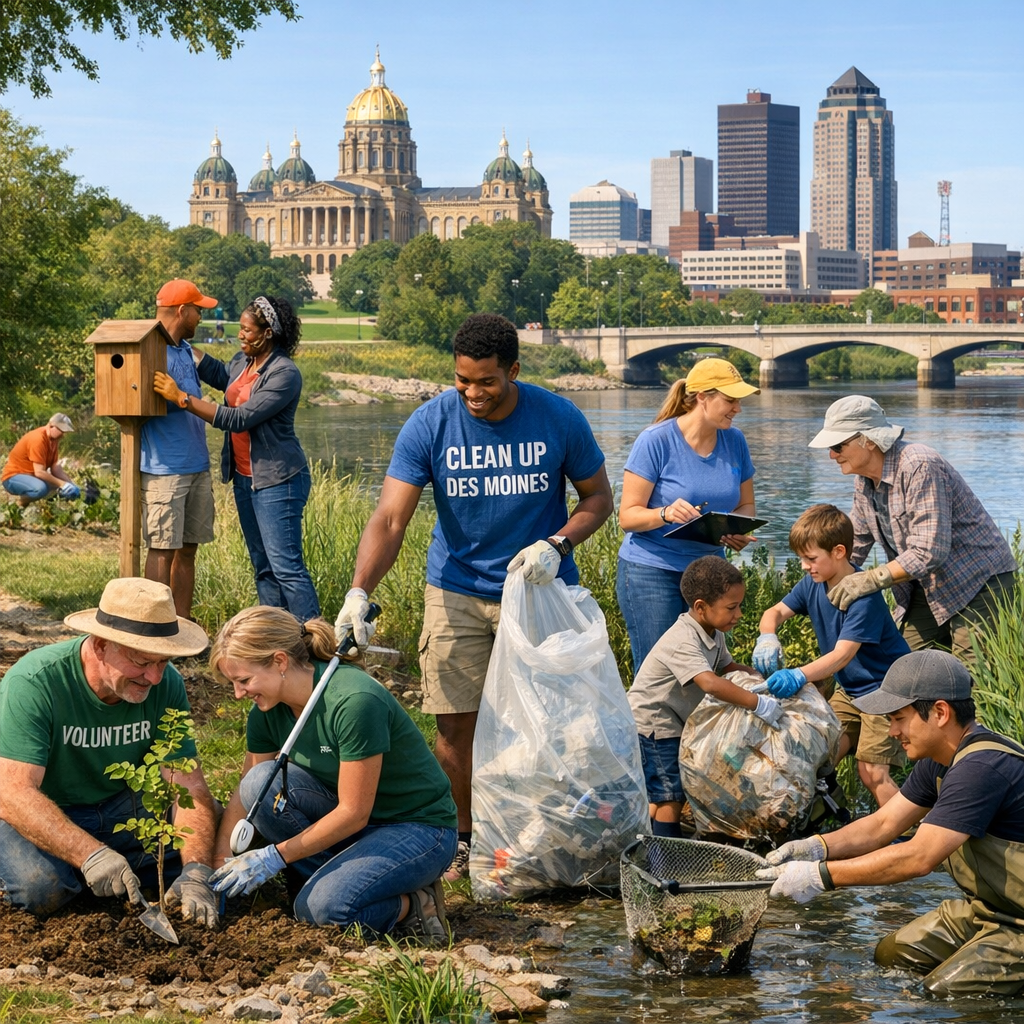
Des Moines is actively implementing programs to enhance environmental sustainability and resilience.
Greater Des Moines Watershed Program
In June 2026, the Iowa Department of Agriculture and Land Stewardship launched the Greater Des Moines Watershed Program. This initiative aims to accelerate conservation practices across 22 counties upstream from the Des Moines metro area. The program enhances cover crop incentives for farmers and landowners, increasing cost-share payments to $25 per acre and expanding the maximum eligible acreage to 500 acres per participant. These efforts are designed to improve water quality by reducing soil erosion and nutrient runoff.
Urban Water Quality Projects
In July 2026, Iowa Secretary of Agriculture Mike Naig announced four urban water quality projects, including one in Des Moines. These projects focus on implementing conservation practices such as wetlands, bioretention cells, and native plantings to manage urban stormwater, reduce nutrient runoff, and enhance local waterways. The Department’s investment of $644,925 in these projects is expected to leverage an additional $653,425, totaling nearly $1.3 million in funding.
Resiliency Partnership
In March 2026, the City of Des Moines partnered with the Iowa Environmental Council to build the city’s resilience to extreme weather and engage residents in sustainability efforts. This collaboration focuses on developing a city-wide resilience hub program and increasing stakeholder involvement in existing sustainability programs, including Think Green This Spring, the Stormwater Best Management Practices Program, Tiny Trees, and Earth Day Trash Bash.
Plug-In Solar Advocacy
Des Moines legislator Rep. Sean Bagniewski is advocating for the legalization of plug-in solar kits in Iowa. These affordable systems, costing between $500 and $1,500, connect directly to standard home outlets and offer a cost-effective alternative to traditional rooftop solar installations. The proposed legislation would permit systems producing up to 1,200 watts, providing residents with more accessible options for renewable energy adoption.
Water Quality Forecasting
NASA satellite data is being utilized in a new nitrate-forecasting system piloted in Des Moines. Led by the University of Iowa’s Hydroscience and Engineering center, this three-year project aims to prevent drinking-water emergencies caused by high nitrate levels. The system will provide both short-term and long-term predictions of nitrate risks, assisting water utilities in making informed decisions to ensure water quality.
These initiatives reflect Des Moines’ commitment to environmental stewardship and sustainability, fostering a healthier and more resilient community for all residents.