

By Emily Johnson
Overheating Planet: Climate Boundaries Already Crossed
A recent study from the Potsdam Institute’s Planetary Boundaries Science Lab shows humanity has pushed our planet past seven of nine critical ecological thresholds. These breaches are no longer remote possibilities—they are fueling crises like food inflation, water scarcity, and stronger storms. Despite growing momentum among clean energy industries, current policies and finance mechanisms lag behind what science says is necessary to prevent catastrophic warming. Leaders meeting at Climate Week urged deeper cooperation and sharper action, pointing out that “patient Earth is not well.”
Conflicts Without End: Global Wars & Their Hidden Costs
The ongoing war between the U.S. and Iran—with spillover fronts through the Middle East—remains one of the most dangerous theaters for global instability. No lasting ceasefire has held. At the same time, other wars continue to escalate: Ukraine faces renewed missile assaults, and across Africa and the Asia-Pacific region, civil wars, insurgencies, and territorial disputes threaten civilians and disrupt lives. The human costs are immense—displacement, loss of essential infrastructure, and rising public health crises in war zones.
The Rise of AI and Inequality: Dual Threats to Global Stability
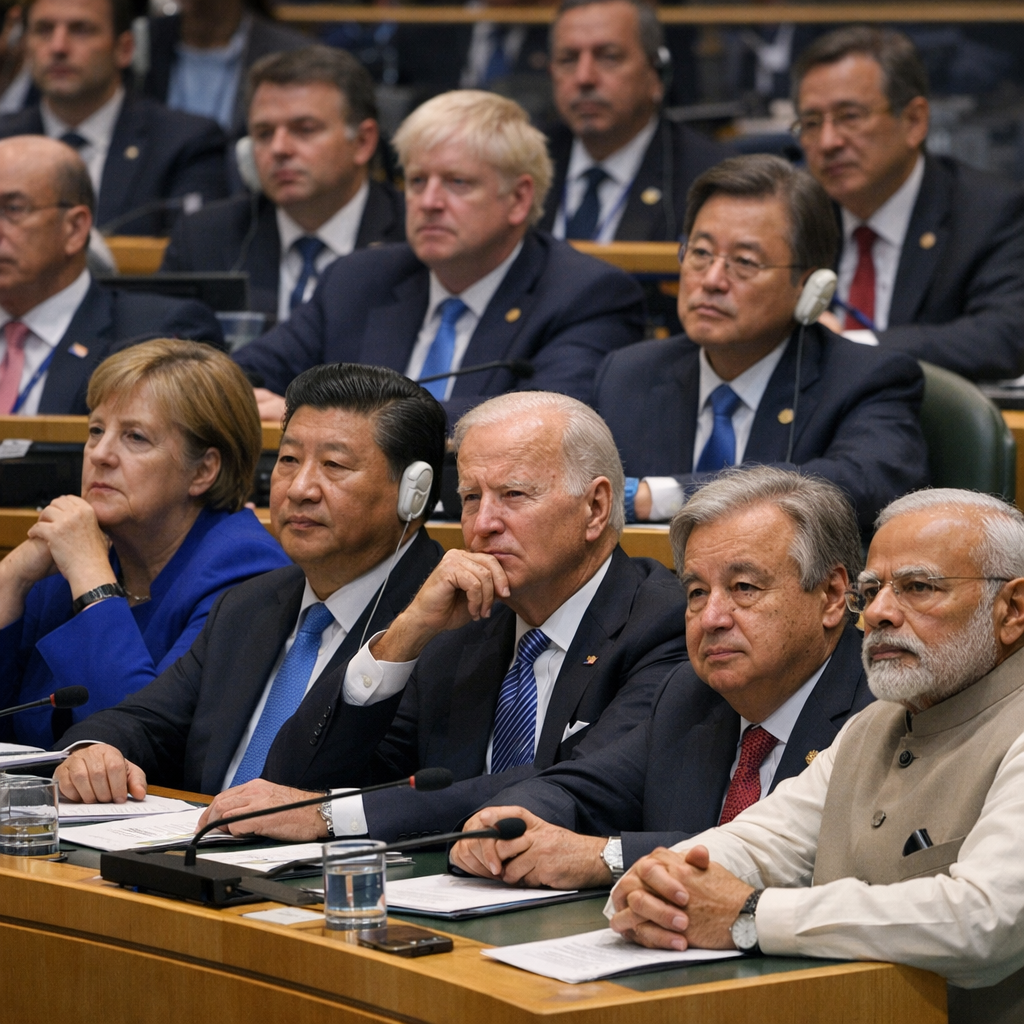
Global leaders convened at the United Nations to confront more than one existential crisis: runaway artificial intelligence and growing inequality. Senior officials warned of AI’s risks when it slips beyond human control, and its potential to worsen divisions rather than advance societies. Likewise, ever-widening gaps in wealth—between nations, communities, and individuals—are sparking instability and undermining trust in institutions.
Why These Issues Matter to Des Moines—and to You
- Economic Ripple Effects: Disruptions in oil supply from the Middle East drive up fuel costs here at home. Meanwhile, a changing climate affects supply chains for food and farm products—a major concern for Iowa.
- Humanitarian Responsibility: With millions displaced by war or climate disasters overseas, there’s both a moral and strategic imperative for the U.S. to remain engaged—through diplomacy, aid, and supporting refugee resettlement.
- Local Opportunity: Iowa might be far from front lines, but in clean energy, agriculture, and ethical tech, there’s space for leadership. Supporting responsible AI regulation, sustainable farming practices, or climate resilience efforts strengthens our community and contributes to global good.
The truth is, the challenges of climate change, conflict, AI risk, and inequality are not isolated—they are interconnected stress points pushing our planet toward a turning point. What global leaders decide today—how they collaborate (or don’t), how they invest (or don’t)—matters for all of us.