

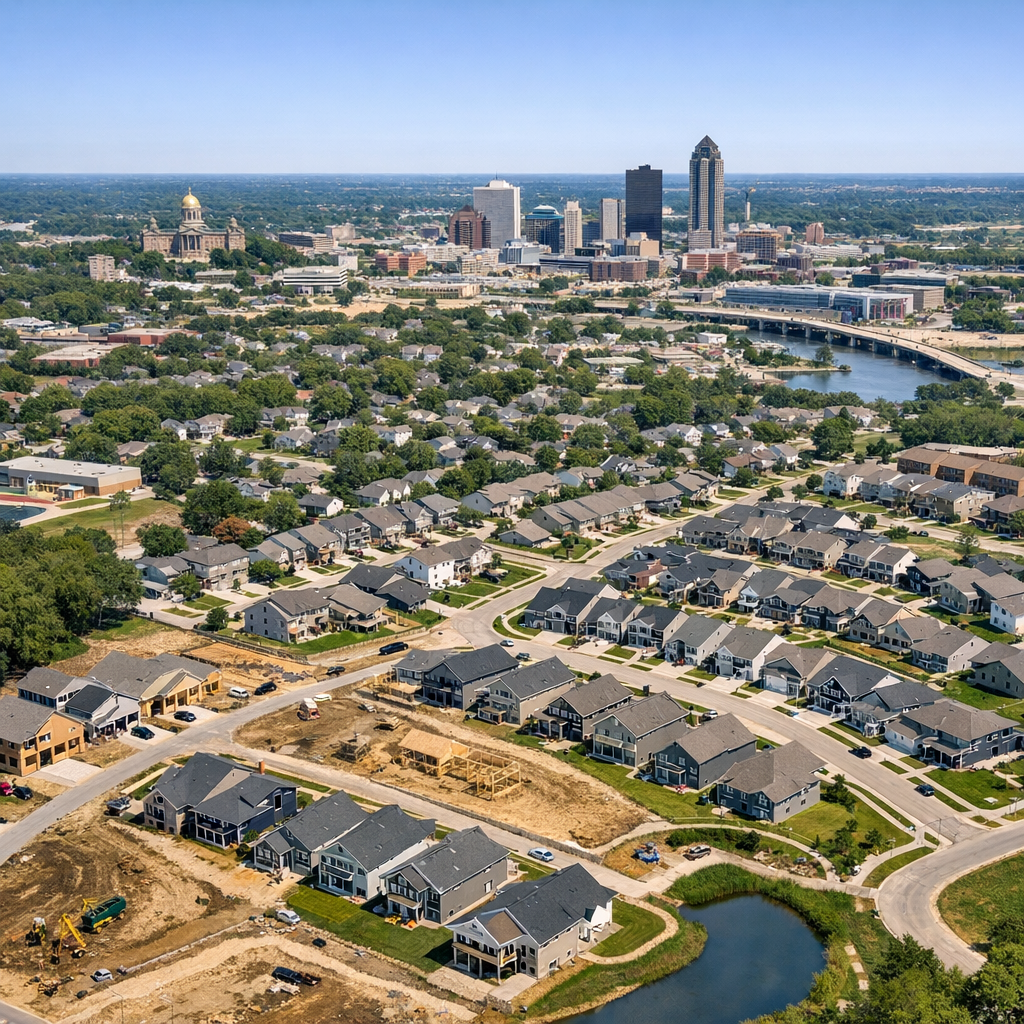
Des Moines’ housing market is experiencing notable shifts, presenting both challenges and opportunities for residents and potential homebuyers.
Current Market Trends
As of April 2026, the median listing price for homes in Des Moines stands at $229,900, reflecting a 5.95% decrease from the previous year. The median sold price is $209,000, marking a slight 0.97% increase year-over-year. Homes are spending an average of 54 days on the market, indicating a moderate pace in sales activity. Additionally, the median rent has risen to $1,200 per month, a 4.35% increase compared to last year. These figures suggest a market that is adjusting, with potential benefits for buyers due to increased inventory and more negotiating power.
New Developments and Initiatives
Several significant housing projects are underway to address the city’s evolving needs:
Mass Timber Townhomes Near Drake University
A $7.1 million project is planned near Drake University, featuring mass timber construction. This development aims to provide modern housing options and is expected to begin construction in 2027.
Cynergy Project by Oakridge Neighborhood
Oakridge Neighborhood is launching the Cynergy project, a $15 million-plus development focused on creating larger affordable housing units for working families. The project will transform a former parking lot into a mixed-use building with commercial space and residential units.
Southridge Flats Housing Development
The proposed $62 million Southridge Flats aims to construct a 160-unit complex on vacant land south of Southridge Mall. This initiative seeks to expand affordable housing options and integrate well with existing infrastructure.
City Initiatives to Combat Blight
Des Moines is expanding its “Improving Our Neighborhoods” home repair program, which provides up to $40,000 to low- and moderate-income homeowners for exterior repairs. With a significant portion of the city’s homes built before 1939, this program is vital for maintaining aging housing stock and enhancing neighborhood aesthetics.
These developments and initiatives reflect Des Moines’ proactive approach to addressing housing challenges and meeting the diverse needs of its residents.